


One Month in Morocco - The Complete Itinerary
The Complete Journey — From the Mediterranean to the Sahara
One month in Morocco is a luxury — and a luxury worth taking if you can. In a month you can really get to know the country, you can scratch beneath the surface and get to those places where tourists rarely tread: the Mediterranean coast east of Tétouan, the Middle Atlas lakes and cedar forests, the Anti-Atlas fossil fields, the remote kasbahs of the Dades gorge & the Merzouga dunes at the edge of the Algerian Sahara.
This month long itinerary begins in Tangiers, visits the Mediterranean east coast, the Rif mountains, the four imperial cities, the modern coastal cities, before heading down to Essaouira, then Marrakesh before heading inland and into the Middle Atlas before reaching the edge of the Great Sahara Desert. It ends back in Marrakesh, as all Moroccan journeys should. Fly into Tangier or Casablanca, or better still catch the ferry from Spain. Fly out of Marrakesh.
So pack your bags and accompany me on our most extensive Morrocan Itinerary, a whole month to explore this amazing country!

Day 1 · Tangier — Arrival and Orientation
Arriving in Tangiers arrive by ferry from Tarifa or Algeciras in Spain, thirty-five minutes if you take the fast boat from Tarifa — is the best introduction to Morocco: the country appearing gradually on the horizon, the minaret of the medina visible above the port as you approach, the smell of the strait giving way to the smell of the city.
Alternatively if it better suits your plans you can Fly into Tangier Ibn Battouta airport
I would recommend staying in or immediately adjacent to the medina. Spend the first afternoon just walking, through the Petit Socco, up toward the kasbah, along the ramparts above the port.
The purpose of the first afternoon is to soak in the atmosphere and getting accustomed to the fact that you are in a very different place rather than actual sightseeing — letting your all your senses adjust to the stimuli that Morocco has to offer. Have dinner in the atmospheric medina rather than the ville nouvelle.
Tonight: Eat at a restaurant in the medina lanes rather than on the tourist-facing squares. Ask your accommodation for a recommendation, or just wander around. This principle of asking the locals, rather than consulting a guidebook, is one that I always follow and which will serve you well for the entire month.

Tangier by night
Day 2 · Tangier — The City in Full
After Breakfast spend some time in the kasbah and visit the Dar el-Makhzen museum: the Roman mosaic collection, the carved ceilings, the view from the ramparts over the strait. By mid-morning head over to the American Legation Museum in the medina — the oldest American public property abroad, now a cultural centre with an excellent collection documenting the city’s literary history. Have lunch in the medina.
After lunch take a taxi west to Cap Spartel, the headland where the Atlantic meets the Mediterranean. Walk to the lighthouse, look at the two seas from above, then descend to the Caves of Hercules below the cliff. Return to the city in time for the late afternoon light on the strait from Café Hafa — the clifftop café that has been serving tea to musicians, writers and travellers since 1921. This is a great place to sit for an hour and watch the ferries crossing below. This is the finest thing you can do in Tangier, and it costs the price of a glass of tea.
Alternatively you could go to Cap Spartel in the morning then take an afternoon excursion to the small coastal town of Asilah, forty-five minutes south by train. It’s a whitewashed Portuguese-walled town on the Atlantic that hosts an international arts festival in August and has an unusually high concentration of murals in its medina lanes. Small, beautiful, and a good way to spend the afternoon if you have seen enough of Tangier.
Spend the evening in the Grand Socco and the Petit Socco for a last walk through the city at night, when the tourists have gone and the medina belongs to its residents rather than its visitors. I would eat again in The Medina, but you might like to try the Ville Nouvelle.

Cave of Hercules
Day 3 · Tétouan — The Overlooked City
Today I recommend an early start from Tangier. Take the bus or a grand taxi to Tétouan — an hour south and east through the Rif foothills. Tétouan is one of those cities that can truly be described as the undiscovered Morocco. It appears on fewer itineraries than it deserves, overshadowed by its proximity to Tangier and the celebrity of Chefchaouen to its south, and as a result, its extraordinary medina — a UNESCO World Heritage Site of genuine distinction — is experienced almost entirely by its own inhabitants rather than by the travellers who fill the more famous cities to its north and south.
In addition to it’s wonderful medina, the city also boasts some fine Andalusian architecture in its the residential quarters, built by the Spanish Ensanche during the Protectorate years.
The city was effectively refounded in the fifteenth century by refugees from Andalusia. After the fall of the Muslim kingdom of Granada in 1492, waves of Moorish and Jewish exiles crossed the strait to Morocco, and a significant number settled in Tétouan, which had been partially destroyed by the Spanish in 1399 and was being rebuilt. The Andalusian settlers rebuilt it in the image of what they had left behind: a city of whitewashed houses, tiled courtyards, carved wooden balconies and a street pattern derived from the medinas of southern Spain that is still visible today.
This Andalusian foundation gives Tétouan its distinctive character. The medina is whiter than other Moroccan medinas — the traditional lime wash is kept up — and its architecture has a European quality that reflects the hybrid culture of its founders: people who were Moroccan by faith and ancestry but Spanish by language and cultural formation. The music of Tétouan — the Andalusian classical tradition of Al-Ala — is one of the finest surviving expressions of the musical culture that the refugees brought from Granada and has been maintained in the city’s conservatories ever since.
I would suggest staying at a guesthouse in the medina
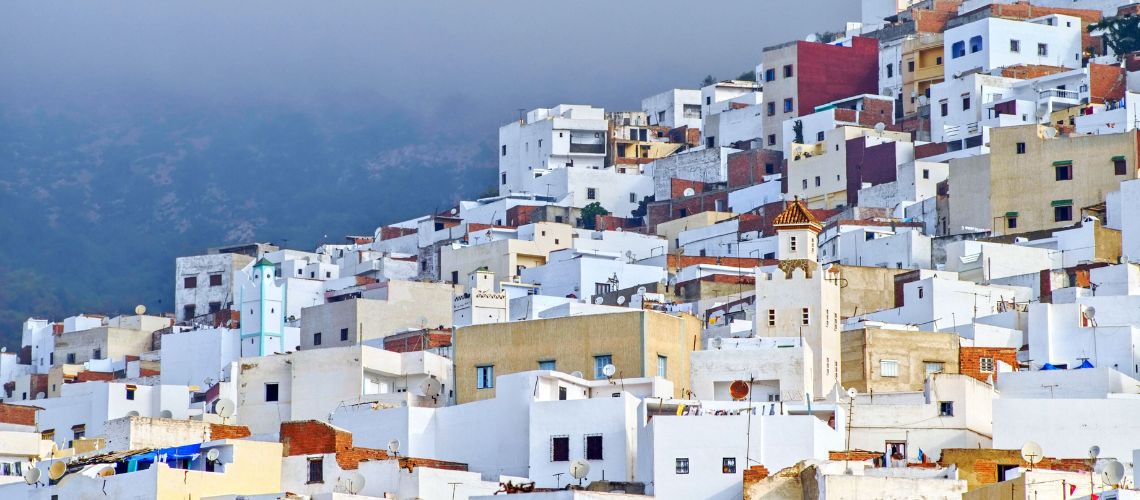
Tétouan
Day 4 · The Mediterranean East — Al Hoceima
Today we are heading off the beaten track to a region virtually no visitors to Morocco include in their itineraries, and it is genuinely rewarding.
The road east from Tétouan to Al Hoceima is one of the great unsung drives in Morocco — roughly three hundred kilometres along and through the Rif Mountains, the Mediterranean appearing and disappearing to the north as the road climbs and descends through a landscape of cedar forest, terraced cultivation and fishing villages that feel genuinely removed from the tourist circuit.
From Tétouan, the N16 road runs along the Mediterranean coast, it is spectacular: the mountains close to the sea, the road winding through Berber fishing villages whose names appear on no tourist itinerary. Kalah Iris, with its small beach in a sheltered cove. Jebha, a fishing village where the daily catch comes in mid-morning and is sold on the quay. The coastline here has the character of a place that tourism has not yet discovered — which means basic infrastructure and extraordinary authenticity.
The full drive takes four to five hours without stops; plan for six or seven if you stop properly. The road is well-maintained at first, but becomes narrower and more demanding — concentration is required, particularly on the mountain sections.
Travel by grand taxi is possible in stages, but I wouldn’t recommend it, as it is slow and time consuming. A hired car gives you the flexibility the drive deserves. Avoid the route in heavy rain when the mountain sections become genuinely treacherous. In spring, when the Rif hillsides are green and the wildflowers are out along the verges, it is a truely magnificient drive.
Al Hoceima itself is a small, functional coastal city on a bay of exceptional beauty, the Rif Mountains falling directly to the turquoise Mediterranean, the beaches among the finest in Morocco and almost entirely unknown to international tourists.
Stay for the night, eat grilled fish at the port the evening and swim in the bay in the morning.
Key; A Tangier, B Tétouan, C Al Hoceima, D Chefchaouen, E Akchour, F Fez, G Meknes, H Volubilis, I Rabat, J Casablanca
You can zoom in and out on the map and click on the various elements for more information.
Day 5 · Al Hoceima — Through the Rif mountains to Chefchaouen
Today I recommend an early start from Al Hoceima. The N2 from Al Hoceima to Chefchaouen is one of the most scenic stretches in the Rif, threading through cork oak forests, cannabis-growing hill villages, and switchback passes with views over deep green valleys. It’s roughly 210 km and takes about 4 to 4.5 hours by car, though the road’s tight curves mean you shouldn’t rush it — this is a drive best enjoyed slowly, with stops for mint tea and photos.
Not far out of town, keep an eye out for glimpses of Al Hoceima National Park, whose rugged coastline and pine-covered cliffs are visible from the higher stretches of road as you begin climbing.
The route then rises into the Rif Mountains proper, where terraced hillsides and traditional Rifian villages, with their distinctive red-tiled roofs, appear along the roadside. This is prime cork oak and argan country, and small roadside stalls sometimes sell local honey or argan oil.
Ketama marks the roughly halfway point — it’s more a functional stop than a destination, useful for fuel, a coffee, or a leg-stretch, though its reputation as a kif-growing centre means it’s not somewhere to linger after dark.
Past Ketama, the landscape opens into gentler valleys around Bab Taza, a good spot to pause and take in views back toward the mountains you’ve just crossed.
Finally, the descent into Chefchaouen rewards you with the town’s famous blue-painted medina rising against the Rif backdrop — arguably the most photogenic finish to any drive in Morocco.
There are a couple of public transport alternatives;
- CTM buses run between Al Hoceima and Chefchaouen, typically taking 5 to 6 hours with a stop in Ketama. Book a day ahead in summer.
- Grand taxis are the more flexible option — you’ll likely do this in stages (Al Hoceima → Ketama, then Ketama → Chefchaouen), paying per seat. Total time is similar to the bus, sometimes faster if taxis fill quickly.
Click here to read our detailed guide to Chefchaouen
You should arrive early afternoon. I would strongly recommend checking into a riad inside the medina —the city at night, when the day visitors have gone, is a different and better place, and you only experience it if you are sleeping inside the walls.
Have a late lunch in the medina and spend the rest of afternoon wandering and photographing the blue city.
In the late afternoon walk up to the Spanish mosque on the ridge above the city. The path is clear, the climb takes forty minutes, and the view over the blue rooftops as the sun descends is one of the genuinely memorable sights of a Moroccan journey. Time it for an hour before sunset and you will have the light exactly right.
Click here to read our detailed guide to Chefchaouen
If you are around on a Friday you are in for a treat as the Friday market in the town, , is one of the most authentic in the north.

View from the Spanish Mosque over Chefchaouen
Day 6 · Akchour & The Rif
I suggest spending the day in the nearby Rif Mountains walking to Akchour and the Cascades waterfalls. The start of the walk is an hour’s drive east by taxi.
The walk to Akchour begins where the tarmac ends, at a cluster of tea stalls beside a river the colour of pale jade, and immediately the Rif Mountains close around you. The path follows the Oued Farda through a gorge of rose-red limestone, the walls rising steeply on both sides, the river audible below through the oleander and fig that colonise the banks. It is not a difficult walk — the path is clear, the gradient manageable — but it is a sustained one, and the gorge deepens as you go, the walls narrowing and the light changing from open sky to something more filtered and green.
The lower falls appear after about an hour: a curtain of water dropping into a natural pool of extraordinary colour, the limestone stained with mineral deposits in shades of copper and ochre. Most walkers stop here. The upper falls, another hour beyond, reward those who continue — a larger drop, a wider pool, and by the time you reach them, almost certainly no one else around.
Return in the late afternoon when the light rakes through the gorge from the west and the red rock goes briefly, brilliantly, the colour of embers. Bring water, bread and more time than you think you need.
As an alternative there are some fine hiking trails within walking distance of Chefchaouen. The Rif hiking trails are increasingly well-marked, and the walk from Chefchaouen toward the village of Ain Tissimane — through cedar forest and Berber agricultural terraces, with views over the Oued Laou valley — is among the finest half-day walks in northern Morocco..
Return to Chefchaouen and enjoy a meal in the medina, you’ve earnt it!

Chefchaouen
Day 7 · Chefchaouen , then South to Fez
Enjoy your breakfast in your riad then spend the morning in the medina: the Plaza Uta el-Hammam and the kasbah garden first, then simply walk. The medina of Chefchaouen is small enough to explore fully in a morning without rushing, just walk slowly, take the lanes that look interesting and allow the colour and the calm to do their work. The Ras el-Maa spring at the eastern edge of the medina, where the mountain water runs through stone channels, is worth finding.
After lunch it’s time to head off to Fez, it takes around 3 hours by bus or grand taxi. This time it might be better to catch a grand taxi as the buses all tend to come from somewhere else and are often full when they arrive in Chefchaouen.
Try to arrive in Fez by early evening. Again I would strongly recommend checking into a riad in the medina — Fès el-Bali rather than the ville nouvelle. Your first evening is for orientation: a walk through the lanes nearest your riad, have dinner close by, and you’re probably ready for an early night.

Chouara Tannery, Fez
Day 8 · Fez — The Medina
Fez or Fès is medieval city, with an amazing medina that is the largest in the world, it demands at least two full days, and even that is an underestimate, I could easily spend an extra day here.
On the first day, explore Fès el Bali (the medina) ideally with a guide — this is the one city in Morocco where the argument for hiring a good local guide makes a lot of sense. The lanes of Fès el-Bali number over nine thousand; without a guide who knows the city, you will spend significant time navigating rather than seeing. But if you don’t have a guide do make sure that you have a smart phone equipped with a mapping app, without it you could get lost for days!
Click here to read our detailed guide to Fez
I would start in the morning at Bab Boujloud — the Blue Gate and proceed down Talaa Kebira to the Bou Inania Medersa. Allow at least forty minutes here: the carved stucco, the cedarwood screens, the marble courtyard with its central basin are among the finest examples of Merinid architecture in existence and deserve careful attention. Continue through the commercial souks — the leather workers, the dyers, the weavers — to the infamous Chouara Tannery, you can usually smell it before you come across it. View it from the terrace of one of the surrounding leather shops.
Have lunch in Fès el Bali and start the afternoon at the Al-Attarine Medersa, immediately adjacent to the Al-Qarawiyyin mosque. The mosque itself is closed to non-Muslims, but the medersa’s rooftop gives a rare glimpse into the mosque’s courtyard. Then proceed to the Seffarine square — the coppersmiths’ quarter, where the hammering has continued since the medieval period — and the shrine of Moulay Idriss II.
In the evening I would eat in or around the medina, try the local Fassi food. I would suggest ordering pastilla, the layered pie of pigeon (or increasingly chicken), egg, almonds and spices, encased in warka pastry as fine as tissue paper, dusted with icing sugar and cinnamon. The combination sounds improbable and tastes extraordinary. Any riad or restaurant serious about Fassi cuisine will serve a version; the best versions take a day to prepare.
Click here to read our Moroccan Food Guide
Harira — the thick, tomato-based soup with lentils and chickpeas — is another Fassi staple, and makes a great starter, it is served throughout the medina and at its best in the small restaurants around the Rcif quarter. Mrouzia — lamb slow-cooked with almonds, raisins and spice in a honey-sweetened sauce — is another firm favourite and a dish that could only have come from this culinary tradition: patient, complex, the kind of cooking that reflects centuries of refinement.

Fès el-Bali
Day 9 · Fez — In Depth
The second day in Fez is for exploring Fès el Bali, letting yourself get lost in the medina ( as long as you have your smart phone to show you the way out should you need it) rather than a prescribed route.
The medina has nine thousand lanes; you have seen perhaps thirty. Go back to the places that stayed with you from yesterday. Find the neighbourhood outside the main tourist circuit — the residential quartiers of the Andalusian bank, quieter and less visited than the Kairouani side — and explore.
I would begin the morning at the Merinid tombs on the hilltop above the medina — the ruins of the royal necropolis are reached by a path behind the Borj Nord fortress. The ruins themselves are modest, but the view over the medina below is the best available perspective on the scale and density of Fès el-Bali. The tiled rooftops, the minarets, the smoke from the hammam chimneys: a scene that hasn’t changed for six hundred years.
Spend the afternoon exploring the medina at your own pace. If there is a workshop, a craft quarter or a street that interested you yesterday and that you passed through too quickly, return to it. If the tanneries were what stayed with you, go back at a different time of day and in different light. If a shopkeeper invited you to tea yesterday and you were in too much of a hurry return and see him today, he’ll be delighted to see you!.

Bab el-Mansour, Mèknes
Day 10 · Meknès and Volubilis
Meknès is sixty kilometres from Fez — forty minutes by train or taxi. Leave Fez early and arrive in Meknès by mid-morning. Check into a riad in the medina.
I would then head upto Volubilis, thirty kilometres north of Meknès, it is the best-preserved Roman city in Morocco, occupying a bowl of agricultural land with the Atlas visible on the southern horizon. Go as early as possible, ideally before the tour buses from Fez arrive. The mosaics — still in situ on the floors of the ruined villas — are extraordinary, and the triumphal arch, the capitol and the forum give sufficient sense of the city’s original scale to make the imagination do the rest. Two hours here is enough, but three is better.
Return to Meknès for the afternoon, see the Bab Mansour gate (at its best in afternoon light), the Mausoleum of Moulay Ismail, the Heri es-Souani granaries and the Agdal basin. The evening food market in the Place el-Hedim is the ideal place to enjoy North Morrocan cusine: unpretentious, local, completely genuine. Snails, Harira & Merguez are popular choices.

Rabat
Day 11 · Rabat
After breakfast catch the train from Meknès to Rabat: one and a half hours. The Moroccan capital is systematically undervisited and has a lot to offer. In the morning visit the Hassan Tower and the Mausoleum of Mohammed V — the great incomplete minaret and the finest example of contemporary Moroccan craft in the country.
After lunch I would suggest visiting the Kasbah of the Oudayas above the river mouth, the Andalusian Garden & stop for a refreshing drink at the Café Maure with its view over the Atlantic.
Late in the afternoon head off to the Chellah necropolis — the Roman ruins and Merinid tombs where storks have nested on the towers for generations, and where the combination of antiquity and wildness is unlike anything else in Morocco.
Click here to read our detailed guide to Rabat
Stay overnight in Rabat, or take the train south to Casablanca if Casablanca interests you more than a night in the capital.

Casablanca
Key; A Casablanca, B Essaouira, C Marrakesh, D Aït Benhaddou, E Ouarzazate, F The Dades Gorge, G Todra Gorge, H Merzouga & Erg Chebbi, I Zagora, J Tamnougalt
You can zoom in and out on the map and click on the various elements for more information.
Day 12 · Casablanca — then Essaouira
Today we are spending the morning in Casablanca. The first thing to say about Casablanca is that it has nothing to do with the film. The city’s global name recognition comes entirely from a work of fiction, and the actual Casablanca — Morocco’s largest city, its economic capital, its primary port, the home of a third of its industrial output — is a very different proposition from the cinematic version.
Which is not to say it is uninteresting. Casablanca is the most modern city in Morocco, the most economically significant, and in some ways the most revealing
Visit the Hassan II mosque (to fully understand I would recommend the guided tour), then wander around the Art Deco district of the city centre, the Place Mohammed V & the Boulevard Mohammed V, not forgetting the medina.
Lunch down at one of the cafes or seafood restaurants overlooking the sea is to be recommended.
Click here to read our detailed guide to Casablanca
After you have finished looking around take the afternoon bus south to Essaouira (350km) from the main Casablanca bus station. But check the bus times and don’t leave it too late as it’s 6.5 hour journey on a comfy modern bus. You should arrive Essaouira by early evening. Check into a riad in the medina.

Essaouira
Day 13· Essaouira
Essaouira is a different Morocco entirely from the cities of the North. Small and intimate. A few days in Essaouira is a chance to recharge your batteries after a busy few days.
After breakfast in your riad explore the medina, get a feel of the place. Make your way down to the port by late morning. The fishing boats are in by now, the fish market is operating, and the stalls along the quay are grilling the morning’s catch. This is where to eat lunch: choose your fish from the display, watch it go over the charcoal, eat it at a tin table with bread and harissa. The prawns are consistently good. So are the sardines. It will cost very little and taste of the sea and the day.
Click here to read our detailed guide to Essaouira
After lunch walk the skala — the sea bastion — with its bronze cannons pointing at the Atlantic and the thuya woodworking workshops in the chambers below. The view of the medina from the ramparts and the offshore islands visible through the sea haze is very atmospheric. Then go back and explore the medina itself: the main commercial street, the gallery quarter (the standard of the galleries in Essaouira is the highest of any Moroccan city outside the major imperial cities), the mellah — the old Jewish quarter — which still carries the architectural character of the Sephardic community that made the city’s Atlantic trade for two centuries.
Evening in Essaouira has a particular quality — the wind drops as the sun goes down, the temperature cools, the medina lanes belong to the people who live in them. Find yourself a good fish restaurant and enjoy the Moroccan seafood.

Camels on the beach, Essaouira
Day 14 · Essaouira — The Wind and the Coast
A full second day in Essaouira. I would start early, straight after breakfast, and head to the beach — the wide Atlantic strand to the south of the city, it is best before the fresh Alizé wind rises around noon. The water is cold by Mediterranean standards; the beach is magnificent, wide expanses of sand as far as the eye can see.
I like to walk along the beach, past the old ruined place lost amongst the dunes, to the village of Diabat, where Jimi Hendrix and other hippies came to avoid the Vietnam war draft in the last 1960’s. Diabat itself in a quiet place although there is a Jimi Hendrix guesthouse where you can grab a drink and have a rest. The walk back along the road is a lot quicker than the walk out along the beach. This walk is all about the journey rather than the destination.
I would suggest lunch back in the medina, then spend the afternoon exploring the medina again at your own pace, stopping for a mint tea and spending time people watching. The souks here are more relaxed and generally have a higher quality of goods than those in Marrakesh: the argan oil is local and genuine, the woven textiles are Rif and Souss traditions, the thuya marquetry is made in workshops you can watch. The Gnawa music that appears in the squares and tea houses is the real tradition, not a tourist performance — the same tradition that influenced Jimi Hendrix when he came through in 1969.
Head the ramparts at sunset. You won’t be alone, sunset here is a major attraction, for a very good reason. There is a spot on the northern end of the skala where the light falls on the ocean and the old Portuguese fortifications simultaneously, and the effect is one of those moments where the beauty of a place stops being backdrop and becomes the whole point. It is hard to take a bad photograph.
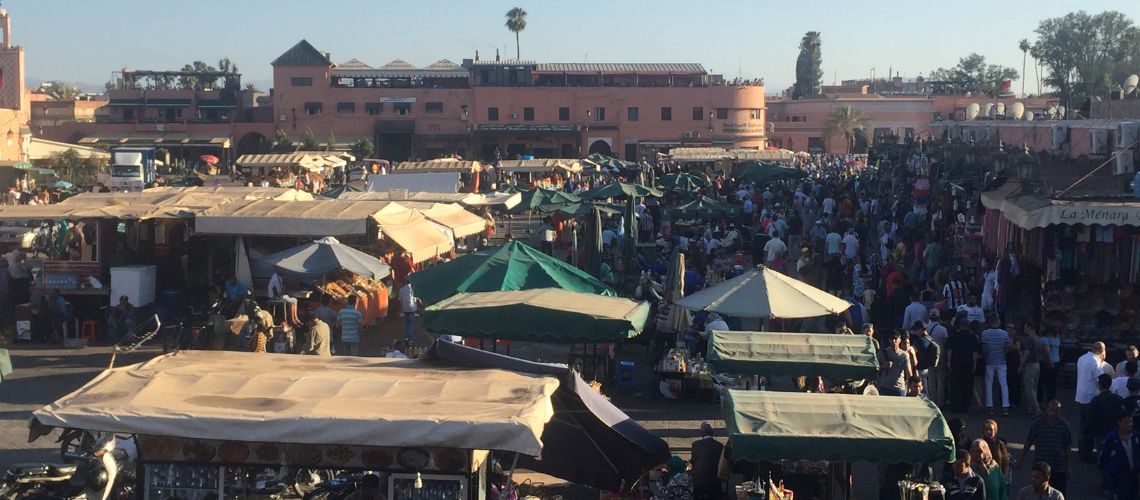
Djemaa el_Fna, Marrakesh
Day 15 · Marrakesh — Arrival
After breakfast catch the morning bus to Marrakesh( three hours). I would recommend booking into a Riad in the medina then having a late lunch at a café overlooking the Djemaa el-Fna and watch the juice sellers, the henna women, the snake charmers in the square. Spend the afternoon wandering through the souks and come back to the Djemaa el-Fna for dinner again in the evening, when the food stalls assemble and the gnawa musicians begin. The two visits to the same square in the same day are utterly different, during the day it is quite sedate, but at night it really comes alive.

Bahia Palace, Marrakesh
Day 16· Marrakesh Sightseeing
On your second day in Marrakesh, now you have your bearings, I would suggest visiting the sites, the souks and the monuments.
My first stop would be the dyers’ souk — a lane strung with hanks of freshly dyed wool in shades of saffron, crimson and indigo, hung between the buildings to dry. If you find the dyers’ souk — and finding it involves taking a small lane that feels like you are going the wrong way, but keep going — stop and look up. The colours against the pale walls and the strip of sky above is one of the most photogenic scenes in the medina.
The next unmissable sight is the Medersa Ben Youssef, the ancient Islamic theological college which is among the finest Islamic interiors in Africa and should not be rushed. It has been restored in the last few years and is magnificient.
After a late lunch, I would suggest visiting atmospheric palaces; the Bahia Palace (painted ceilings of extraordinary quality) and the El Badi Palace ruins (the storks on the battlements, the sense of magnificent loss).
Finish the afternoon at the Saadian Tombs, discovered behind a wall in 1917 and preserved in the condition in which they were sealed: a jewel-box of carved marble and painted stucco containing the remains of the Saadian dynasty.
Marrakesh eating: I would suggest eating at a stall in the Djema el-Fna one eveing to experience the atmosphere and enjoy dinner at one of the restaurants overlooking the square for your second evening.
For lunch there are plenty of atmospheric places in the medina, although after the very generous Riad breakfasts, you may not be that hungry. There are also plenty of places to rest and enjoy a refreshing mint tea

Aït Benhaddou
Day 17 The High Atlas — Aït Benhaddou and the Mountain Road
Today, is a road day. The journey east of Marrakesh is best done with a hired car and driver, which gives the flexibility to stop at the viewpoints and villages that make the Atlas crossing more memorable and enjoyable. I would strongly recommend organising this in Marrakesh, rather than just taking a shared taxi from the bus station.
East of Marrakesh the road over the Tizi n’Tichka pass — the main Atlas crossing at 2,260 metres — is one of the great mountain drives in Africa: the landscape changes from red earth and argan trees below to cedar forest and then bare rock as the road climbs, the views over the southern plateau appearing and expanding as you crest the pass. In winter, snow can close the road; in spring, the verges are full of wildflowers and the Atlas villages below are a patchwork of cultivation and stone.
Stop at Aït Benhaddou, thirty kilometres west of Ouarzazate — the great mud-brick ksar on its hillside above the river, a UNESCO World Heritage Site and the backdrop for more films than any other location in Morocco. Go late afternoon for the best light on the towers. Cross the river, climb the ksar, look back from the top at the valley and the desert landscape extending south.
I would recommend staying here overnight. But if you are a Star wars or Gladiator fan you may want to head on to the beautifully located city of Ouarzazate, home of possibly the World’s largest movie studios ( by area), where parts of these films were shot.
Click here to read our detailed guide to Ouarzazate and the Draa valley
Driving note: The Tizi n’Tichka road is well-maintained and entirely manageable by car. Do not attempt it in ice or fog without local advice. A driver who knows the road is worth the cost for the pass section, even if you prefer to drive yourself on the plateau.
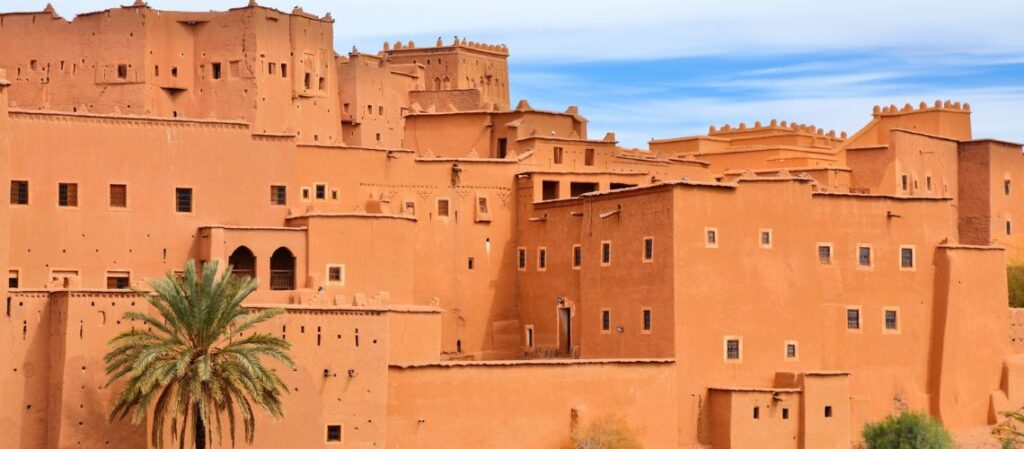
The Taourirt Kasbah, Ouarzazate
Day 18 · The Dades Gorge
After breakfast hit the road east from Ouarzazate toward the Dades Gorge. The road is known as the Route des Kasbahs, and it earns the name within the first twenty minutes. The pre-Saharan plain stretches north toward the High Atlas, and along the road — and on the hillsides above it, and in the palm oases below it — mud-brick kasbahs appear at intervals that suggest a landscape once as densely settled and commercially active as any in Morocco. This was the Saharan trade route, and every kasbah marks a family or clan that grew wealthy controlling a section of it.
The rose-growing valley of Kelaat M’Gouna is the midpoint and the sensory highlight: in May, when the Damascus roses that cover the valley sides are in bloom, the air carries a fragrance that is simply improbable at this scale. Outside May the valley is less dramatic but the rose-water distilleries are worth stopping at regardless.
The gorge itself arrives without warning — the road enters a narrowing canyon of rose-red limestone and the walls rise around you to three hundred metres.
The village of Msemrir, at the head of the gorge, is three hours from Ouarzazate by road — and it feels like you have gone 300 years back in time. Stay a night in a guesthouse in the gorge itself, the canyon walls above you, the sound of the river below.
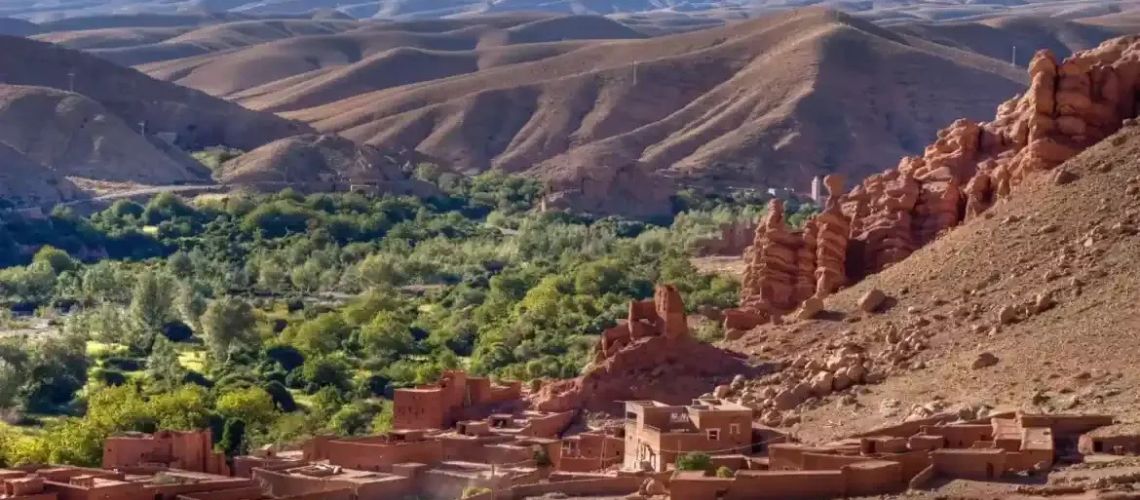
The Dades Valley
Day 19 · The Dades to the Todra Gorge
Walk upstream in the early morning before the heat arrives, the river cold and clear beside you, the rock formations of the upper valley known as the Fingers of the Monkey are genuinely extraordinary in the morning light. The silence, broken only by the river, is the gorge’s finest quality.
Spend some time enjoying the gorge before heading east towards our next destination, the equally impressive Todra Gorge.
The road from the Dades to the Todra is an hour of sustained pre-Saharan theatre. East from Boumalne Dades the landscape opens into a hammada of flint and scrub, the Atlas receding to the north, the light hardening as the altitude drops and the desert asserts itself more plainly. The road is straight where the plain allows and winding where the oueds have cut their channels through the rock. Occasional palmeries appear in the valley floors — sudden green against the ochre and grey — and then disappear again. The Todra announces itself not gradually but all at once: the canyon walls simply appear beside the road, vertical and enormous, and you understand immediately why people come here from the other side of the world.
The Todra is narrower and more dramatic than the Dades — its walls rising three hundred metres above a gorge barely fifteen metres wide at its tightest point — and the scale of it, when you walk in from the road and the walls close around you, is genuinely staggering
The gorge is popular with rock climbers, and the number and quality of established routes on the vertical walls is impressive. Non-climbers can walk through the canyon along the river for several kilometres beyond the main tourist access point, where the gorge widens and the crowds thin. The village of Aït Baha, two hours walk into the upper gorge, has a small guesthouse and an entirely different atmosphere from the tourist hotels at the canyon entrance.
Stay in one of the simple guesthouses built into the canyon walls at the narrow point, the position is everything, the comfort secondary. Eat whatever the family is cooking, and sleep with the window open to the sound of the water.

Sunrise in the Todra Gorge
Day 20 · The Todra Gorge and onto Merzouga
Today I recommend an early start, be standing on the path upstream before seven in the morning, the Todra Gorge is at its most extraordinary in the first hour after dawn, when the light enters the canyon from the east and the walls — three hundred metres of rose-red limestone — glow briefly with a colour that no photograph has ever quite captured.
This is the argument for an overnight stop: to be inside the gorge before the tour buses arrive from Ouarzazate, when the only sounds are the river and the occasional rock pigeon. The upper gorge, walked in that early light with no one else around, is one of the finest quiet experiences available in southern Morocco.
After enjoying the tranquility of the gorge, have a late breakfast before getting back in the car.
The drive from Todra to Merzouga takes three to four hours and crosses some of the most consistently dramatic landscape in Morocco. East from the gorge the road climbs briefly onto a plateau of bare hammada before descending into the Ziz valley — one of the great surprises of the south, a palm oasis of extraordinary length running north to south through the desert plateau, the date palms so dense and so green against the surrounding rock that it feels completely unreal.
The town of Erfoud marks the edge of the Saharan proper, the landscape beyond it flattening and reddening as the vegetation thins to almost nothing.
Then, an hour south of Erfoud, the dunes appear on the horizon. Not gradually — Erg Chebbi does not announce itself subtly. The sand wall simply materialises against the sky, improbably large, entirely real, and nothing you have seen in the previous three hours has prepared you for the scale of it.
You will be spending the next night in a desert camp, I would strongly recommend booking ahead, especially if you are looking to stay at a luxury camp or if it is the peak time ( March / April and Oct).
My advice is to choose the option that gets you furthest into the dunes and furthest from the road. The authentic experience of the Sahara is not compatible with proximity to a generator or a road. The best camps are an hour’s walk (or camel ride) from the edge of the erg, which puts them far enough from the town that the silence is real and the light on the dunes uninterrupted by any artificial source. Once you have chosen to come this far, it is worth going far enough to get the untainted experience .
Enjoy the amazing sunset over the dunes and dinner in your desert camp, then stay up and watch the stars, how brightly they shine when you are away from artificial light and pollution. Then enjoy the quietness of the desert, but be warned it can get surprisingly cold overnight.
Timing: October and March / April are the best months. Summer temperatures exceed 45°C and the experience, while still visually extraordinary, is physically challenging. Winter nights in the dunes are genuinely cold — below freezing is possible — which is something camps do not always emphasise and visitors do not always anticipate
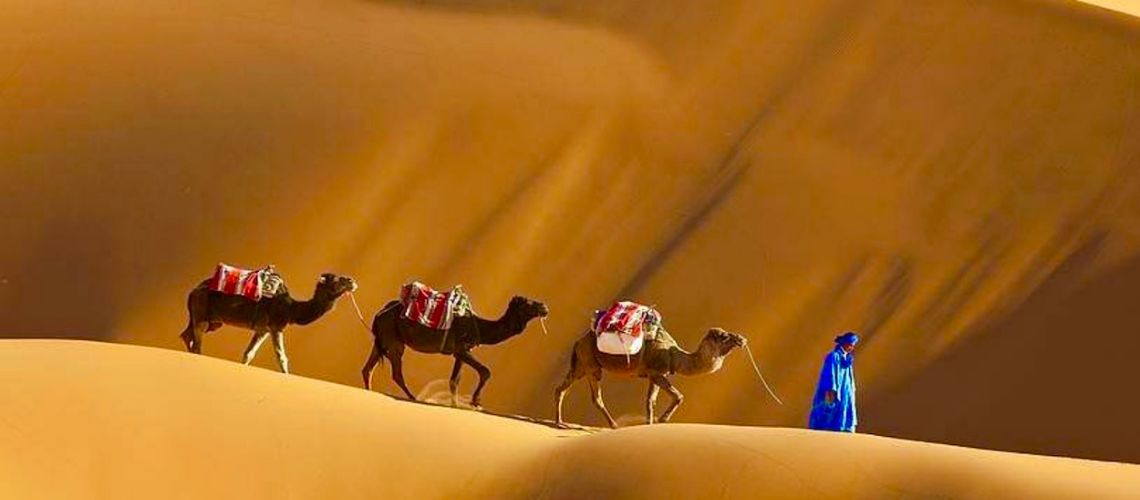
The Sahara
Day 21 · The Sahara.
Wake up early to watch dawn break from the top of the nearest high dune: the light arriving from the east in shades of pink and gold, the shadows in the dune folds going from purple to blue to amber as the sun rises.
After breakfast visit the village of Khamlia a Gnawa community, three kilometres from Merzouga, it is inhabited by a community descended from the sub-Saharan Africans brought to Morocco as slaves in the sixteenth and seventeenth centuries — the same community whose music, in different form, is heard at night in the squares of Marrakesh. In Khamlia, the Gnawa music is not a tourist performance; it is a living spiritual tradition
Also worth visiting are the surrounding fossil beds, They are extraordinary: trilobites of Devonian age, preserved in three dimensions in the quartzite, available from roadside dealers in quantities and qualities that range from the mundane to the genuinely remarkable.
After looking round it’s time to get back in the car, don’t leave it too late as the road west from Merzouga back toward the Draa is a long day’s drive — four to five hours before you reach the valley but the landscape makes it worthwhile.
The Saharan reg gives way gradually to the pre-Saharan plateau, the scrub returning in increments, the occasional argan tree signalling the slow return of something resembling fertility. Zagora, reached by late afternoon, is where the Draa properly begins, and where I would suggest stopping for the night.
Zagora is a town that lives primarily in the shadow of its own mythology. The famous sign — Tombouctou 52 jours — points south toward the Sahara and references the old camel caravan route to Timbuktu, fifty-two days through the desert on a good camel with favourable winds. The town itself is a modest administrative centre strung along a single main road, functional rather than beautiful, with a Thursday and Sunday market that draws the surrounding Amazigh communities and has genuine local character. Its value is it’s location: it is the last proper town before the desert, the place where you provision, orientate and decide how far south you are willing to go.

The Draa Valley
Day 22 · The Draa Valley
Today the itinerary takes you through the Draa Valley. The pace is slower so you can stop and appreciate the sights of the valley.
Stop at Aït Isfoul when the towers catch the afternoon light from the road. Stop at the unnamed villages in the valley floor that appear between the registered sites and that no guide mentions: the palmery where a farmer is working an irrigation channel by hand, the ksar wall where children are playing in the shade, the tea house with three plastic chairs outside and a proprietor with no particular interest in whether you stop or not.
These are the hours that you will remember the most. Not the monuments — the monuments are magnificent and you will remember them — but the unscheduled hour in a village whose name you never quite caught, drinking tea in the shade of a mud-brick wall while the Draa palms move slowly in the afternoon wind above you.
Stop at for the night at Tamnougalt — the ancient ksar whose ruling family has been welcoming travellers for generations, there are a cluster of guesthoses around the Kassbah.
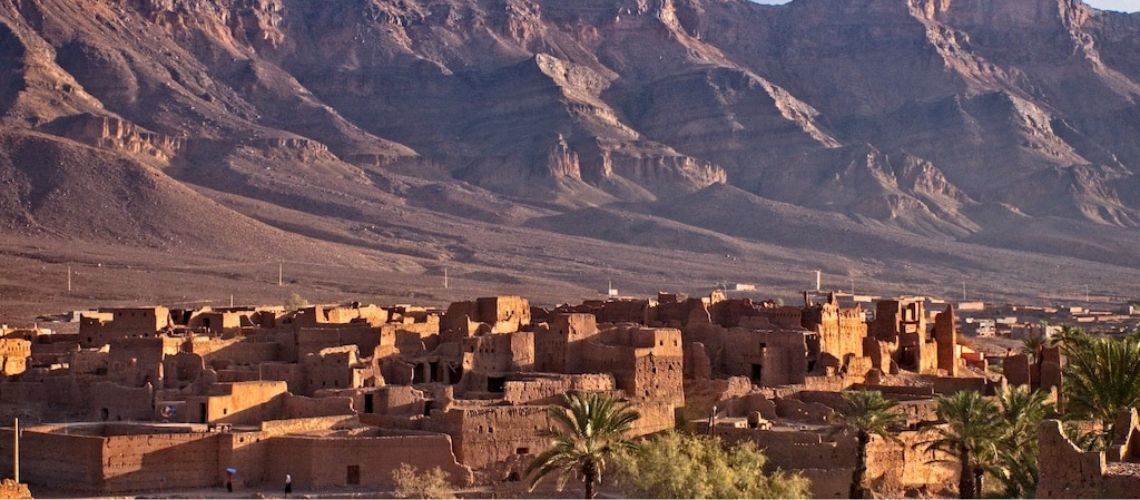
Tamnougalt
Key; A Tamnougalt, B Taroudant, C Taliouine, D Agadir, E Souss-Massa National Park, F Marrakesh,
You can zoom in and out on the map and click on the various elements for more information
Day 23 · The Anti Atlas
The departure from Tamnougalt westward feels, initially, like leaving the Morocco you have come to understand for something older and less legible. The Draa valley releases you gradually — the palmeries thinning, the ksour spacing further apart — and the road begins to climb into the Anti-Atlas with a purposefulness that the flat valley floor has not prepared you for.
The Anti-Atlas is geologically the oldest mountain range in Morocco, worn by time to something more essential than the younger, snowier High Atlas to the north. The rock here is ancient and exposed — Precambrian in places, pushed to the surface by forces operating on timescales that make human history feel briefly and usefully insignificant. The colours are extraordinary: deep red ironstone, pale quartzite, the green flash of an argan cluster in a sheltered fold.
The road through the Tizi n’Tinifift is paved but serious — narrow bends, sheer drops, the kind of driving that requires attention and rewards it with views over the southern plateau that extend, on a clear day, toward the Saharan horizon you have just left
The crest of the pass delivers the Souss plain suddenly and completely — the valley opening below in a sweep of green and gold, the High Atlas filling the northern skyline, Taroudant somewhere in the warm flatness ahead, invisible but pulling you toward it like a current.
The journey across the anti atlas takes four hours, but it is best to allow 5-6, which gives you time to stop along the way.
You should arrive Taroudant by late afternoon, head to your riad to check in, before heading to the see the ramparts at dusk, followed by a good meal in the medina. You’ve deserved it!

Taroudant
Days 24 Taroudant
Taroudant is the city I recommend to people who ask me where in Morocco they should go to get away from the tourist circuit without actually leaving Morocco’s best landscapes and history. It is the city I would go to if I wanted to spend a week reading and eating well and walking in medina lanes where I was not the most unusual thing in them. It is, in the quietly genuine sense, a secret
Click here to read our detailed guide to Taroudant
After breakfast at your riad, head to the ramparts, before the heat builds — walk or ride the circuit in the early morning light when the pisé is pale gold and the Atlas is clear to the north. Then head into the Berber souk, see the jewellery quarter first, then the spice merchants, then wherever curiosity takes you.
I recommend lunch in the Place Assarag at one of the simple restaurants facing the square — harira, kefta, bread.
The afternoon belongs to the Palais Salam gardens if you need shade and stillness, or to the Arab souk’s leather and textile lanes if you do not. As the sun drops, return to the ramparts. The evening light on the pisé walls — deep rose, then amber, then something approaching red — is the thing you will remember forever.
Have dinner in the medina, early, and then head to the square again after dark when the tourists have gone back to their hotels and the city belongs to the locals. It is a good time to order a mint tea and people watch. Taroudant at night is one of the most genuinely unhurried places in Morocco.
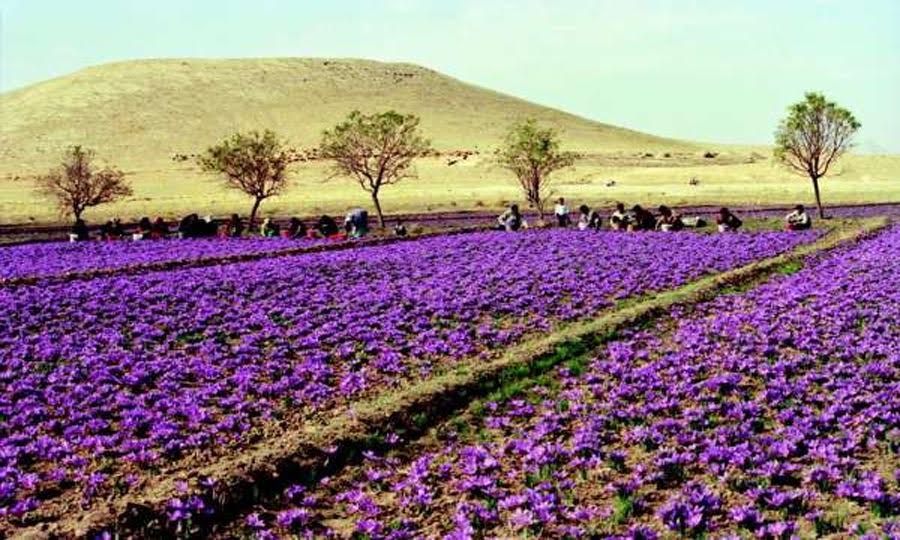
Crocus Harvest, Taliouine
Day 25 · The Souss Valley
On your final day I recommend a trip to Taliouine, the heart of Saffron production in Morocco. It looks particularly amazing in the Autumn when the crocuses are flowering.
The road east from Taroudant to Taliouine takes about two hours and earns every minute of them. It leaves the Souss plain gradually, the flat agricultural land giving way to foothills as the road begins to climb into the territory of the Sirwa massif — the great extinct volcano that dominates the landscape between the High Atlas and the Anti-Atlas, its flanks terraced and cultivated to a height that makes you understand why people have been farming here for centuries.
The approach to Taliouine announces itself in October and November by colour: the hillsides around the town are planted with Crocus sativus, and the harvest — which happens at dawn, the purple flowers picked before they open fully in the morning light — briefly transforms the landscape into something that does not look entirely real. The saffron grown here is among the finest in the world; the altitude, the soil and the particular quality of the Sirwa light produce a product that serious cooks and spice merchants seek out specifically.
Outside harvest season the cooperative is still worth visiting — the drying rooms, the separation of the crimson stigmas from the flower by hand, the extraordinary concentration of labour that explains why genuine saffron costs what it does. Buy here rather than anywhere else in Morocco. The provenance is unimpeachable and the price reflects a local rather than a tourist economy. The drive back to Taroudant, with the Sirwa behind you and the Souss plain glowing in the late afternoon, is the day’s final reward.
Enjoy your final evening meal in the Place Assarag, enjoy the food and reflect on your Moroccan adventure .
Transfer the following morning to Agadir (one hour) for onward flights, or back to Marrakesh (two and a half hours) for wider international connections.
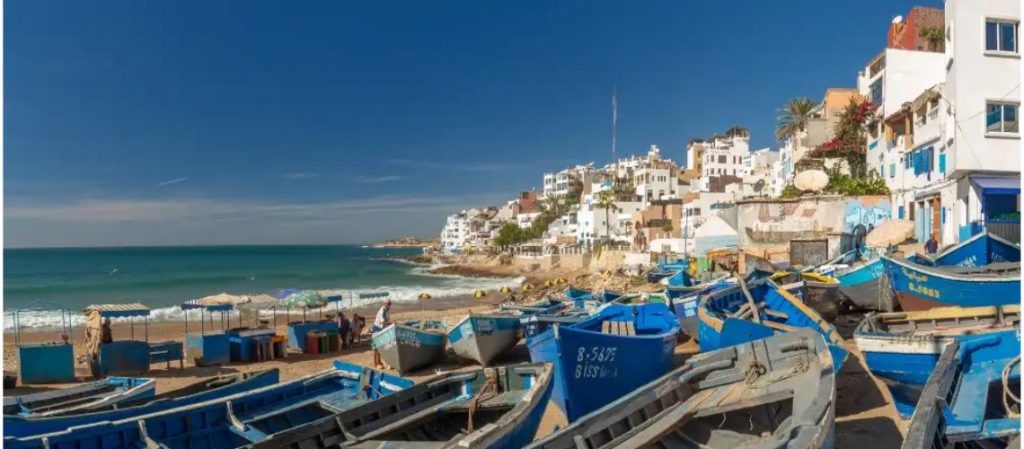
Agadir
Day 26 · Agadir
The road from Taroudant to Agadir is one of southern Morocco’s most rewarding short journeys — a seamless transition from the ancient ochre walls of a Berber market town to the modern Atlantic sweep of Morocco’s surf coast. Despite covering just 80 kilometres, the route passes through a landscape of quiet grandeur: argan orchards, patchwork market gardens, and the great flat expanse of the Souss plain, framed on both sides by mountain ranges.
Taroudant sits at the foot of the High Atlas to the north and the Anti-Atlas to the south, and both ranges remain in view for much of the drive, their rocky ridges shifting in colour as the morning light changes. As you approach Agadir, the mountains recede, the air takes on a coastal saltiness, and the road broadens into a modern highway edged with palm-lined roundabouts.
I would recommend the inexpensive Supratours / CTM bus that does the journey several times a day ( 1.5 to 2 hours), although shared taxis are not much more expensive.
Get the morning bus / taxi to arrive in Agadir for lunch.
Click here to read our detailed guide to Agadir
Agadir has in recent years become a destination for package holiday makers. It is not, in the conventional sense, a culturally rich destination. There is no historic medina — the 1960 earthquake destroyed the old city in fifteen seconds, killing twelve thousand people, and the city was rebuilt from scratch on a modern grid plan. There are no imperial monuments, no ancient souks, no labyrinthine lanes.
What Agadir has, and has in abundance, is ten kilometres of Atlantic beach, three hundred days of sunshine a year, a warm and reliable climate.
However what I would suggest you do in the afternoon is visit one of the finest museums in South Morocco, the Amazigh Heritage Museum.
Situated on Boulevard Hassan II at Place Ait Souss, in the heart of Agadir, the Amazigh Heritage Museum preserves the memory of the Berber people of the Souss-Massa region. It opened on 29 February 2000 — exactly forty years after the earthquake that destroyed the city — and houses more than 900 pieces tied to Amazigh culture and tradition. Highlights include traditional silver jewellery, regional rugs, ancient wooden tools, and doors typical of local architecture. Ancient manuscripts dating to the 16th century and fine pottery round out a collection that brings everyday Amazigh life vividly into focus. Guided tours are available in multiple languages.
Day 27 · Souss-Massa National Park then Marrakesh
This morning I would suggest heading to the Souss-Massa National Park which lies roughly 40–60 km south of Agadir. It makes an easy and rewarding half-day excursion, aim for an early breakfast and leave as soon as possible after breakfast.
The most convenient way to get there is hiring a grand taxi from Agadir’s city centre, which takes around 45–60 minutes and costs approximately 150–250 MAD depending on your negotiation skills. Alternatively you could rent a car which gives you the most flexibility, especially for exploring the park’s spread-out trails. Organised day tours from Agadir hotels are widely available and often include a guide — ideal for wildlife spotting. Public transport is limited, so independent travellers are better served by taxi or hire car.
The drive south along the N1 coastal road is pleasant, passing through flat agricultural plains and Argan tree groves before the Atlantic coastline comes into view near the park entrance.
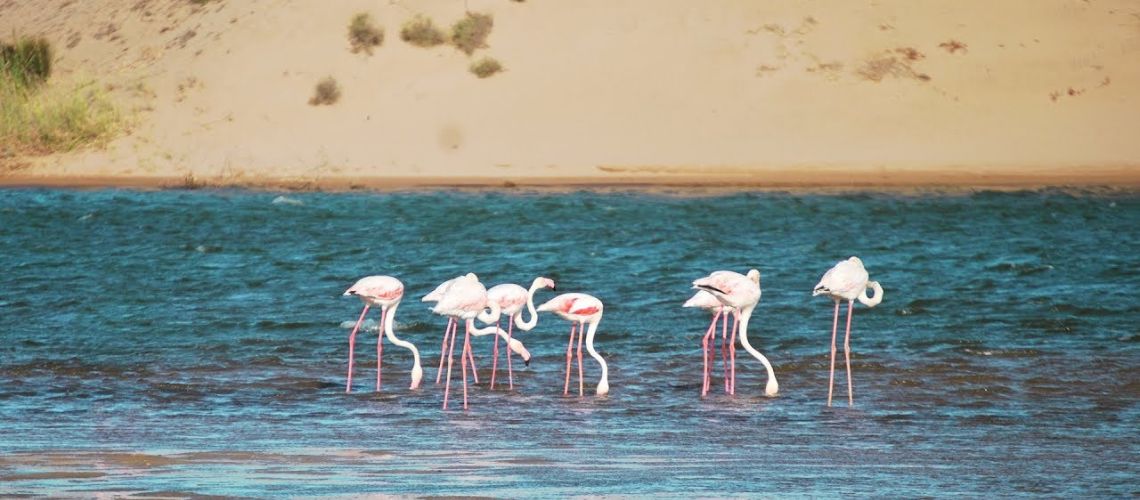
The park is a haven for birdwatchers, with the Oued Massa estuary attracting flamingos, herons, and the rare bald ibis — one of Morocco’s most critically endangered species. Visitors can walk riverside trails, take guided 4×4 excursions into the dunes and scrubland, and spot Dorcas gazelles. The Atlantic beach at Massa itself is beautifully wild and uncrowded.
Allow a morning for the park, before heading back to Agadir for a late lunch
This afternoon you are travelling back to Marrakesh. The bus is the most affordable and convenient way to travel, with departures roughly every hour. CTM and Supratours are the two recommended operators — clean, comfortable, and reliable, with the journey typically taking around 3 to 3.5 hours. Tickets cost around MAD 100–160 (roughly £8–13). It’s worth booking online a few days ahead, especially around Moroccan public holidays when seats fill quickly.
When you get to Marrakesh, head for your riad, check in, freshen up and head out at dusk or early evening to the Djemaa el_Fnaa, have a wander around reacquainting yourself with the energy of Marrakesh, before finding somewhere to eat.
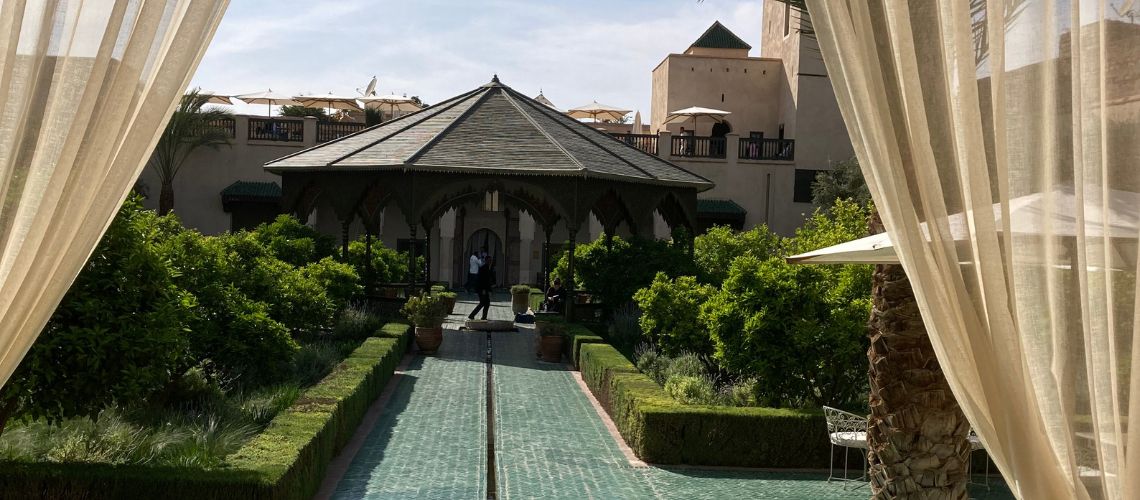
Le Jardin Secret, Marrakesh
Day 28· Marrakesh — Revisit & enjoy the city
I suggest that you spend the final two days in Marrakesh, viewing it through new eyes after having spent almost four weeks travelling around Morocco, Marrakesh is a different experience from the first visit.
You will be much more confident now and you will have context now: you have been in the tanneries of Fez and can appreciate what the leather goods in the souks represent. You have crossed the Atlas and can see the mountains from a Marrakesh rooftop with a different understanding of what lies behind them. You have maybe eaten traditional mechoui in the Draa Valley and know what the Djemaa el-Fna’s version is measuring itself against.
I would suggest the first day going back to the souk, you will have a different experience to the first time, possibly even revisit the palaces or other places that made a strong impression at a different time of day, to your first visit. It will feel different.
Just sit around drinking Mint tea and people watch, relaxand enjoy the ebb and flow of the city, you’ll feel more of a local than a tourist now!

Le Jardin Majorelle
Day 29 · Marrakesh Gardens
I would start the morning by catching a taxi to my favourite place in Marrakesh, indeed one of my favourite places in the World, Le Jardin Majorelle. If you can, be there when it opens, first thing, before the crowds arrive. The cobalt blue against the bougainvillaea, the sound of the birds, the sheer exoticism is magical in the quiet of the early morning, especially without the crowds. Don’t forget to visit the Berber museum in Majorelle’s old studio that most visitors walk past.
I would suggest staying for a couple of hours, there is a lovely, although rather pricey, café on site.
Then head to the Menara Gardens for a slower, more peaceful experience. It’s a vast olive grove — over a hundred hectares — surrounding a large reflective pool fed by an underground khettara system bringing water from the Atlas Mountains twelve kilometres away. The pool has existed in some form since the twelfth century; the pavilion at its edge was restored in the nineteenth.
These gardens were once the Sultan’s gardens but now they are popular with local Marrakshi families come on Friday afternoons to picnic and sit and do very little. The Atlas reflected in the still water on a clear morning is beautiful.
If it’s the weekend I would suggest that you make time to visit the Agdal Gardens. It is larger, older, and even less visited than the Menera Gardens. Four kilometres long, walled, planted with olive, fig, pomegranate and citrus of considerable antiquity, fed by the same khettara system it is open only at weekends.
It’s two large basins — the Grand Bassin and the Dar el-Hana — were used for royal boating parties and practical irrigation simultaneously, which tells you something about Moroccan pragmatism. On a Friday afternoon with the gates open and almost no one else present, the Agdal has a quality of silence and timelessness that the more celebrated gardens, with their entrance queues and audio guides, simply cannot match. Go there and enjoy the escape from the city.
In the evening I would suggest spending your last evening in Marrakesh in a restaurant overlooking the Djemaa el-Fna, enjoying the food, the view and reflecting on your amazing Moroccan experience.
After dinner have a slow wander through the Djemaa el-Fna on your way back to your riad, and listen to the music. You will now understand the culture, you have visited the home of the gnawa musicians. You know by now what you are listening to and where the tradition comes from and how deep it runs.
You are now begining to understand Morocco and it’s people!
Day 30 · Enjoy a final morning in Marrakesh before flying home
Enjoy your final breakfast in your riad and if you have time just wander the streets of the medina, before catching a taxi back to the airport.
Flying out of Marrakesh would be the obvious choice, but you may have other ideas.
I hope your month in Morocco, has been interesting, fun and certainly taught you more about Morocco and probably yourself.
I usually find that such a long immersive trip does change you on a deeper level and that the memories you make will last a lifetime.

Practical Notes — Four Weeks
The Ferry option from Tarifa or Algeciras in Spain to Tangier port is in my opinon the best way to start your Morrocan journey. Otherwise fly into: Tangier Ibn Battouta (TNG) or Casablanca Mohammed V (CMN) then catch the train north to start in Tangier.
Fly out of: Agadir (AGA) or Marrakesh (RAK).
Getting around:
Grand taxis ( generally quicker) or buses ( cheaper) between Tangier and Tétouan & Chefchaouen and Fez.
A Hired car is recommended for the Tétouan to Al Hoceima and Al Hoceima to Chefchaouen legs. Train for Fez–Meknès–Rabat–Casablanca (Morocco’s rail network is excellent on this corridor — clean, punctual, comfortable, inexpensive). Bus for Casablanca–Essaouira and Essaouira–Marrakesh
A hired car with driver from Marrakesh for the southern sectionis advisable, indeed it is essential for the Dades, Todra, Merzouga and Draa Valley stages.
A standard car is fine, however a 4WD vehicle maybe required for access to the Erg Chebbi desert camp, although this can usually be arranged by the camps. The driver-guide arrangement — where the same person drives and guides through the south — is the most practical and economical option for a journey of this complexity.
Best season:
This itinerary works best across two seasons if your timing allows: April for the rose harvest in the Dades valley and the wildflowers in the Atlas & Rif mountains; October for the saffron harvest at Taliouine and the date harvest in the Draa Valley. A single trip in either April or October hits most of the best of each region. Avoid the Mediterranean coast section in winter (rough seas, some roads affected by rain); avoid the Sahara and the cities of Fez and Marrakesh in July–August due to the extreme heat.
Accommodation:
I would always strongly recommend staying in a Riad for an authentic and atmospheric visit. Specifically I would recommend;
Tangier & Tétouan; Hotel or small guesthouse in medina or kasbah quarter.
Al Hoceima; Small Guesthouse close to the beach
Chefchaouen; Riad inside the medina walls.
Fez; Riad in the Fès el-Bali medina.
Meknès; Riad or small guesthouse inside the medina walls,
Rabat / Casablanca; Hotel or Guesthouse, it is probably worth not booking this in advance as you may change your mind about which city you wish to stay in.
Essaouira & Marrakesh; Riad or small guesthouse inside the medina walls
Guesthouse in Aït Benhaddou village or alternatively a riad in Ouarzazate,
Gorge guesthouses in the Dades and Todra (excellent value, family-run, often very good food); desert camps in Erg Chebbi (book in advance for the better camps)
Draa Valley guesthouses in Tamnougalt and Zagora. These are not luxury options; they are authentic ones, and they will give you more of a taste of life in southern Morocco than any number of nights in a five-star riad.
For a touch of luxury Palais Salam or alternatively a medina riad in Taroudant.
Hotel in Agadir
For your final two / three nights in Marrakesh why not upgrade to a fancier Riad than you had the first time, there is a lot of competition, especially in the quieter season so you can often bag a bargain.
The fourth week dividend: The difference between three and four weeks in Morocco is not simply one more week of the same experience. It is that you have time to talk to people andunderstand what makes Morocco tick. The conversations that happen on a long journey — with the driver who has crossed the Atlas a thousand times, with the cooperative manager in Taliouine who built something from nothing, with the guesthouse family in the Dades gorge who have been feeding travellers for forty years — are some of the best experiences Morocco offers, and they require time, patience and the willingness to stray off the beaten track and visit places where tourists rarely go .
Four weeks gives you the time to have an experience that you will never forget.
One World is Enough
I’m Peter , the founder of the Inspirational Traveller. I set up One World is Enough 30 years ago after spending a year travelling around Asia in the mid 90’s. On my travels I met lots of talented artisans making the most amazing things, they just needed a market for them in the West.
So I started working with them, firstly through selling on market stalls and music festival stalls. This soon grew into a shop and then a bigger shop, then an online business. Now we send One World is Enough’s collection of fair trade clothes and crafts around the World.
We design and source all our products from our own network of fair trade producers.
We produce our own range of beautiful vibrant fair trade clothes and crafts for beautiful vibrant people!
We do this by working with our own team of lovely small scale producers in India, Nepal, Indonesia, Thailand, Laos, Morocco & Afghanistan.
All our designs are made in short runs, and when they’re gone, they’re gone!
The Inspirational Traveller
People kept asking about my travels to some of the more unusual, off the beaten track destinations that I travelled to. So I set up the Inspirational Traveller, as a curated travel guide.
I write these guides and itineraries, when I have the time, so it is a bit of a slow process, but I am adding more and more content, as I get the time.
The Inspirational Traveller is designed to a curated travel guide, to inspire you about places to visit, rather than be an exhaustive guide.
Hope you enjoy it!
